 Model card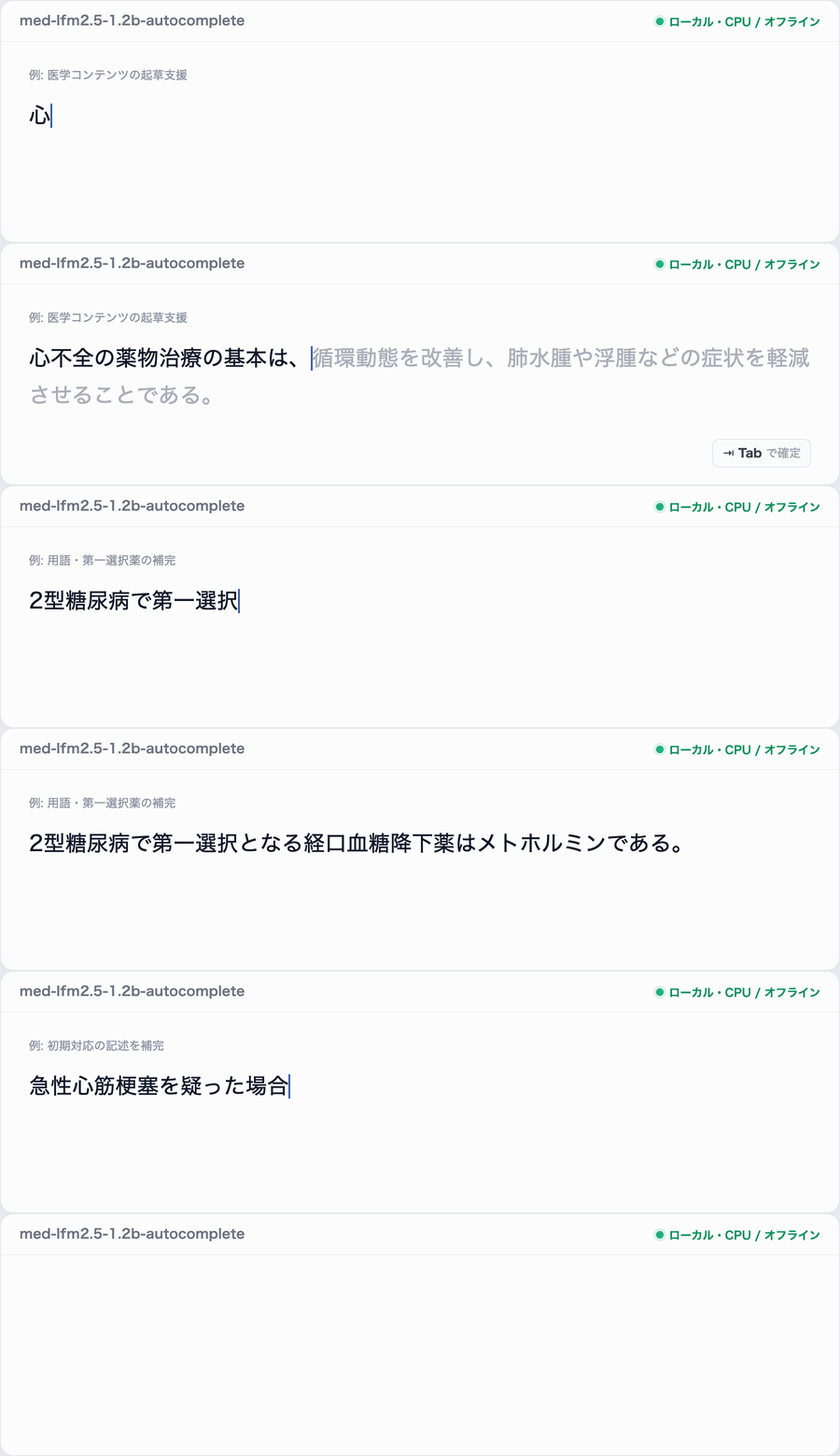
Why so small, at 1.2B
Charts can't leave the hospital. So it needs to run on a machine inside the building — ideally on CPU alone. A design that ships everything to a giant cloud model trips over that one constraint first. I chose LiquidAI's LFM2.5-1.2B as the base for exactly that lightness. Fast, and self-contained on the machine at hand. Completion is a feature people stop using the moment it lags, so this call wasn't optional.
From "answering" to "continuing"
Plain LFM2.5 is good at the QA reflex: ask it something, it answers. But completion needs the opposite — not an answer, a natural continuation. So I reshaped its temperament across four stages.
- Lay the groundwork. More pre-training on medical text, to settle it into the vocabulary.
- Practise continuing. Tuning shaped to the completion form.
- Dissolve the knowledge in. Fold what it knows from QA into the flow of continuation.
- Finish. A final pass to tidy up QA accuracy.
The loss is applied only to the continuation. That's what turns quiz-style answers into prose that reads like a medical note.
Saying it plainly
This is a drafting aid, not an answer. It's a small model, so it can't guarantee the accuracy of doses or figures. The fine points of guidelines are the same. A clinician must check every suggested continuation, and pair it with external verification (RAG) where needed. It isn't meant to make diagnoses or treatment decisions.
License
It inherits the base model's LFM Open License v1.0. Free for research and personal use. Commercial use by companies with over USD $10M in annual revenue requires a separate license from Liquid AI. The demo assets used in training live separately, as a companion dataset.